The Narrow Window
A small church in Shere, an anchoress’s cell, and the origins of DEATH OF A SAINT

Welcome to new readers who have recently joined me here. I write about my life as an author and creator. In particular, I share ideas about writing, and the unexpected discoveries that sometimes find their way into my novels.
The year I lived in England, I tried to say yes to every opportunity that came my way. Living abroad is a rare privilege, and I wanted to see as much as possible.
One of those trips took me to Surrey—and what I saw informs will be my newest novel, Death of a Saint, the fifth book in The Chronicles of Jane Eyre series. Due out later this summer.
The Narrow Window
In a small English church in Shere, there is a narrow slit in the stone wall.

It was the squint, a viewing window of an anchoress, a woman literally sealed within the church, anchored to that spot.
In medieval England, a woman could choose—or be called—to live permanently enclosed in a small cell attached to a church. Once sealed inside, she would spend the rest of her life there, devoted to prayer.
The cell had only a few openings.
One window faced the church altar.
Another allowed food to be passed in.
Through a third she might speak to visitors seeking prayers or counsel.
The Squint
The opening I saw was the first kind. The squint was carefully angled so the anchoress could see only one thing.
The altar.
Her entire visible world might have been reduced to that small patch of sacred space.
The thought chilled me.
The Ceremony that Sealed Her Away
The ceremony in which an anchoress entered her cell often resembled a funeral. Prayers for the dead were sometimes said, and once the door was sealed she was considered, in a spiritual sense, “dead to the world.”
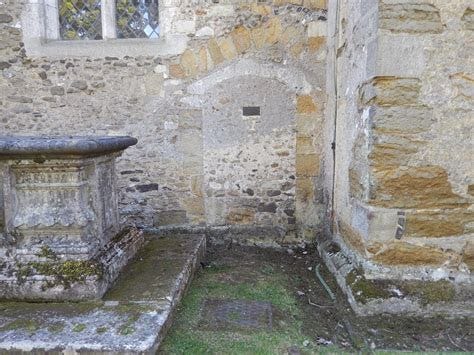
She would remain there for the rest of her life. The cell itself would have been tiny—perhaps no larger than a walk-in closet. Stone walls. Damp air. A narrow bed or straw mattress. A candle. A prayer desk.
And that window.
Anchoresses were not entirely abandoned. A servant might bring food through a small outer window. Villagers could come to speak with her, asking for prayers or advice. In some communities, the anchoress became a respected spiritual figure. Still, the isolation must have been profound.
With one possible exception…some anchorites may have kept cats in their cells, although these women were warned about becoming too fond of their feline companions. Especially if talking to her cat took precedent over focusing on prayer.
Help Me Choose a Name…
This raises an irresistible question. As a cat owner, I was curious. What might she have called it? Our cat is Miss Maple.
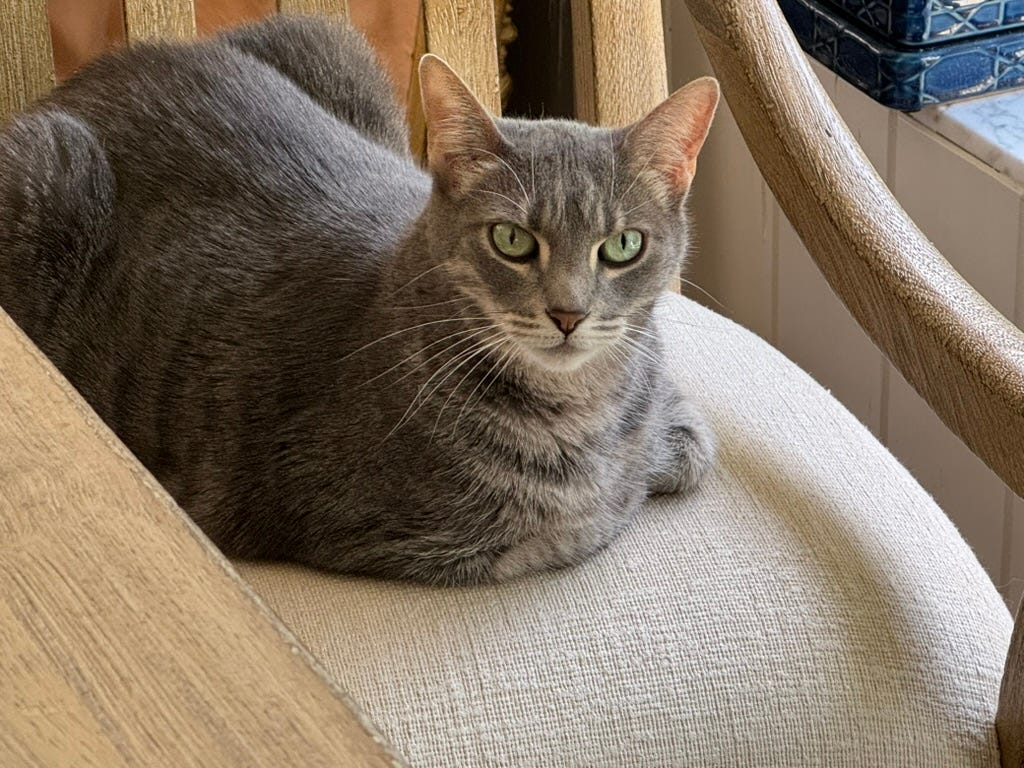
Medieval people gave their animals wonderful names. Here are a few possibilities. You may vote on one—or suggest a better one (comment or email me at jcslan@joannaslan.com).
Pax – Latin for “peace.”
Agnes – a common medieval name meaning “pure.”
Candle – for the small candle lighting her cell.
Mousebane – practical and slightly fierce.
Julian – after Julian of Norwich, the most famous anchoress.
Mercy – a word she would have repeated often in prayer.
Shadow – because cats appear and disappear mysteriously.
Compline – the final prayer of the day.
Mite—simply meaning “little one,” a common name in the day
If you were living in a stone cell with only the altar in view and a cat for company, what would you name it?
Mystery Mondays
Tonight at 7 p.m. ET at Joanna’s Readers, we’ll welcome Lana McAra, another Florida author!
A Handy Little Chart to Help You
With love, Joanna